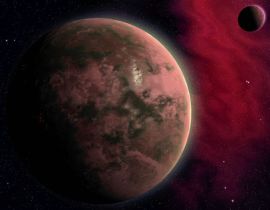
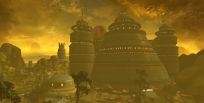
Revision as of 23:42, 26 January 2011 by WikiSysop(talk | contribs)(Created page with "*thumb|270pxthumb|204pxNal Hutta<br />Type: Terrestrial<br />Temp: Temperate<br />Atmosphere: Type I<br />Hydrosphere: Moist<br /...")
Nal Hutta Type: Terrestrial Temp: Temperate Atmosphere: Type I Hydrosphere: Moist Gravity: Standard Terrain: Urban, mountainous rain forests Length of Day: 87 Standard Hours Length of Year: 413 Local Days Sapient Races: Humans, Hutts, various aliens Starport: 1 Imperal class Population: 3 billion Hutts, 4 billion of other speicies Function: Homeworld, trade, crime Government: Clan council Tech Level: space Major Exports: Tourism, contraband goods Major Imports: Foodstuffs, high tech, luxury goods
Nal Hutta's spaceport moon, known for its vertically-built cities, experienced spaceship mechanics and its lawlessness. It is a centre for smuggling operations, and is supposedly where Han Solo learned the smuggler's trade as a youth. When the Hutts took over the moon, they began using it as a spaceport, and soon huge refuelling spires and repair facilities reached up from the ground into orbit. There is no observable land mass left on Nar Shaddaa, since the spaceports have grown around the spires and now completely cover the planet. The moon was uninhabited during the time that the Evocii lived on Nal Hutta, although they called it Evocar. When the Hutts took over the planet, they relegated the Evocii to Nar Shaddaa. However, the Hutts used them as semi?free slaves on the moon, and the press of so many various species and technologies eventually mutated the Evocii. Nar Shaddaa is similar to its parent planet, having a day, which lasts 87 standard hours, and a year, which lasts 413 local days. It is tide-locked with Nal Hutta, and only shows one side to its planet. This results in a day, which has two distinct periods of ligthness: one in which is in full view of the sun, and one in which it obtains light reflected from Nal Hutta. This also results in two periods of night.